
The JBER VA Loan Guide
Eligibility, Strategy, the Fourplex play, and how to not mess it up.
A 2026 field guide for service members stationed at Joint Base Elmendorf-Richardson, separated veterans staying in Alaska, and military families PCS'ing into Anchorage.
TL;DR
The VA loan is the most underused wealth-building tool in America. Active duty service members at JBER, retired veterans, National Guard and Reserve members with six years of service, and surviving spouses are all eligible. In 2026, full VA entitlement means no loan limit and zero down payment on properties up to whatever a lender will approve.
The single most powerful use of the benefit is buying a fourplex with zero down, living in one unit for 12 months, and renting the other three units to cover your entire mortgage.
This guide walks through eligibility, qualifying income, the best Anchorage neighborhoods, the fourplex strategy, what happens when you PCS, the appraisal process, the 30-day closing timeline, and the most common questions JBER buyers ask.
You don't have to read every section. The table of contents above lets you jump to whatever you need.
If you only read one section, make it Section 6. That's the one that matters most.
Section 1: Why I wrote this guide:
I'm Slavik Lund, an Anchorage mortgage broker, a veteran, and the #1 mortgage loan originator in Alaska for 2025.
I'm also a real estate investor. I currently own 10 rental units across Anchorage, almost all of them small multi-family buildings I bought using the same playbook I'm about to walk you through. My first fourplex closed when I was 21. I used my VA benefit for the next one. I've used the benefit multiple times since to keep building.
I wrote this guide because most of the VA loan content online about buying near JBER is generic, written by people who've never used the loan, and missing the one thing that actually matters: the VA loan is the most underused wealth-building tool in America.
Most veterans use their VA loan to buy a house. The smart ones use it to buy an income producing asset
If you're stationed at Joint Base Elmendorf-Richardson, separated from JBER and staying in Alaska, retiring here, or PCS'ing into Anchorage for the first time, this is the guide I wish someone had handed me when I was your age. It covers:
- Whether you're eligible and what your entitlement actually means
- What your BAH will cover at current Anchorage prices
- Which neighborhoods make sense for JBER buyers and why
- The fourplex strategy - how to use your VA benefit to buy a multi-unit property, live in one unit, and have your tenants cover the mortgage
- What happens to your loan if you PCS out
- A few quirks specific to Alaska that catch people off guard (winter appraisals, well and septic, residual income)
- A step-by-step timeline from your first call to closing
I help veterans run this play every single day. The math works. The strategy works. And the VA loan is the cleanest way to start.
Let's get into it.


Section 2: Who's Actually Eligible for a VA Loan
Most people think VA loans are just for active-duty service members. That's wrong. The benefit covers a much wider group than people realize, and a lot of veterans walk around with full entitlement they've never touched.
Here's who qualifies:
Active duty
If you're currently serving at JBER or anywhere else, you're eligible after 90 continuous days of active service. That's it. You don't have to wait until you separate. You don't have to wait until you hit a certain rank. Once you've crossed the 90-day mark on active orders, the benefit is yours to use.
This catches a lot of E-3s and E-4s off guard. They assume the VA loan is something you earn at the end of a career. It's not. It's a benefit you've already earned by serving.
Retired or separated veterans
If you served honorably and separated, you're eligible. The minimum service requirement depends on when and how you served:
- Active duty during wartime: 90 days of service
- Active duty during peacetime: 181 days of service
- Service after September 1980: generally 24 months of continuous active duty or the full period you were called to active duty
If you were medically discharged or separated for a service-connected condition, the minimum-service requirements are often waived. If you're 100% disabled like Marcus from Section 6, you also get the VA funding fee waived, which can save you $10,000 to $15,000 on a typical Anchorage purchase.
National Guard and Reserve
This is the group that misses out most often. If you've served six years in the Selected Reserve or National Guard, or if you were called to active duty for at least 90 days, you're eligible. A lot of Alaska Air Guard and Army Guard members I work with had no idea they qualified until we pulled their Certificate of Eligibility.
If you're Guard or Reserve and you're not sure, get your COE pulled before you assume you can't use it. Takes a few minutes. Costs nothing. It’s much easier if we tackle this for you.
Surviving spouses
Un-remarried surviving spouses of veterans who died in service or from a service-connected disability are eligible for the full VA benefit. Spouses of veterans who are missing in action or prisoners of war are also eligible. In some cases, spouses who remarried after age 57 may still qualify.
If you're a surviving spouse and nobody's ever explained your benefits to you, that's not your fault. The VA isn't great at outreach. But the benefit is real and it can be substantial.
What "full entitlement" actually means
Here's where a lot of veterans get confused. VA entitlement is the dollar amount the VA guarantees on your behalf to the lender. It's not your loan limit. It's not your down payment. It's the insurance the government provides so the lender will give you a zero-down loan.
If you've never used your VA benefit, or you've used it and either sold the property or had the entitlement restored, you have full entitlement. That means in Alaska as of 2026, there is no VA loan limit for you. You can borrow whatever a lender will approve, with zero down, on a property up to the appraised value.
If you have an existing VA loan on another property (say, a house in your last duty station you kept as a rental), you have partial entitlement, and Alaska's 2026 conforming loan limit of $1,249,125 sets the ceiling for zero-down borrowing. Above that, you'd need a down payment to cover the gap. That ceiling is high enough that it doesn't restrict most Anchorage purchases, even on small multi-family.
Full entitlement means no VA loan limit. Zero down. Up to whatever a lender will approve.

What to do if you're not sure
If you're reading this and you're not 100% sure whether you're eligible, the answer is almost always yes. The fastest way to confirm is to request your Certificate of Eligibility (COE) through the VA, or just email us and we’ll take a look. I pull COEs for clients in about 15 minutes. No commitment. No credit pull at that stage. You either qualify or you don't, and you'll have a definitive answer same day.

Section 3: 2026 Alaska VA Loan Limits and Entitlement Math
Here's something a lot of veterans don't realize about Alaska: the state has one of the highest VA loan ceilings in the country. That matters more than people think, especially when you're looking at Anchorage prices.
Let me break down what the numbers actually mean in 2026.
The short version
If you have full VA entitlement, there is no loan limit in Alaska. None. You can borrow whatever a lender will approve, with zero down, on any property up to the appraised value. That's not a typo.
The "VA loan limit" you've probably read about online only applies if you have partial entitlement, meaning you already have an active VA loan somewhere else. For most first-time VA buyers and for any veteran whose entitlement has been restored, the limit doesn't apply at all.
"Full VA entitlement in Alaska = no loan limit. Zero down on any home or fourplex."
What "full entitlement" looks like in practice
If you've never used your VA benefit, you have full entitlement. If you used it once, sold the property, and had your entitlement restored through the VA, you have full entitlement again. Same outcome.
In 2026, that means a JBER service member can buy a $720,000 home in South Anchorage with zero down. Or a $900,000 fourplex in Eagle River with zero down. Or a $600,000 fourplex in the Mat-Su Valley with zero down, like Marcus did in Section 6. The number isn't capped by the VA. It's capped by what you can qualify for on income, credit, and the appraised value of the property.
That's the part that makes the VA loan structurally different from every other low-down-payment program. FHA caps out at $557,750 in Alaska. Conventional 5%-down loans cap at conforming loan limits and require PMI. VA has neither problem.


What "partial entitlement" looks like
If you're using a VA loan right now on a property somewhere else (your last duty station, a rental you held onto, a home your spouse lives in), you have partial entitlement. The amount left depends on how much of your guarantee is currently tied up.
In Alaska in 2026, the conforming loan limit is $1,249,125. This is the ceiling for borrowing with zero down when you have partial entitlement. Above that number, you'd need to bring a down payment to cover the gap between your remaining entitlement and the purchase price.
The math gets technical fast and depends on your specific Certificate of Eligibility. The short version: even with partial entitlement, you can almost always still buy something meaningful in Anchorage with zero down. A $1.2M ceiling covers virtually every single-family home in the city and every small multi-family building.
What this means for fourplex buyers specifically
This is where Alaska's high ceiling becomes a real competitive advantage. A $1,249,125 zero-down limit means you can comfortably buy a fourplex in Anchorage, Eagle River, or the Valley with no money out of your pocket. Even at the higher end of small multi-family pricing (a nicer four-unit building in a good neighborhood), you're well within the limit.
Compare that to a veteran trying to do the same play in a lower-cost state where conforming limits are lower. They might hit the ceiling on a fourplex and need to bring cash. You don't. The state's classification as a high-cost area works in your favor.
What you actually need to do
You don't need to memorize any of these numbers. You don't need to calculate your remaining entitlement on your own. All of this gets handled when you get pre-approved. A lender pulls your Certificate of Eligibility, looks at what you've used and what you haven't, and tells you exactly what your zero-down ceiling is.
If you want a fast read on where you stand before talking to anyone, this 3 minute quiz gives you a baseline. If you want the real answer with your actual numbers, that takes a phone call and about 15 minutes.
Section 4: Why Your Military Pay Goes Further Than You Think on a Mortgage Application
Here's something almost no service member I work with knows about their own paycheck. Your tax-free entitlements get grossed up by 25% when you apply for a mortgage.
That's not a typo. It's a real underwriting rule, and it changes what you qualify for in a way that almost nobody explains.
What gets grossed up
If you're active duty at JBER, four pieces of your pay are tax-free:
- Basic Allowance for Housing (BAH)
- Basic Allowance for Subsistence (BAS)
- Cost of Living Allowance (COLA), which Anchorage qualifies for
- Active duty base pay if you're in a designated combat zone
When you sit down to apply for a mortgage, the lender doesn't just take those numbers at face value. They add 25% to each of them to account for the fact that you're not paying federal income tax on that money. The logic is simple. A civilian making the same dollar amount would have to earn more to net the same take-home, so the lender treats your tax-free pay as if it were the higher pre-tax equivalent.
Your tax-free entitlements get grossed up by 25% on a mortgage application. Most service members never find out.
What that actually means in real numbers
Let's run a quick example.
Say you're an E-6 at JBER with dependents. Your gross monthly pay looks something like this:
- Base pay: $3,800
- BAH: $2,400
- BAS: $460
- COLA: $250
On paper, that's $6,910 a month. That's the number you'd put on a job application or quote at a dinner party.
But on a mortgage application, the lender treats it differently. Base pay is taxable, so it stays at $3,800. BAH, BAS, and COLA get grossed up by 25%.
- BAH: $2,400 becomes $3,000
- BAS: $460 becomes $575
- COLA: $250 becomes $313
Total qualifying income: $7,688 a month. That's $778 more than your real paycheck shows, every single month, just because of how the math works for military borrowers.
That extra income translates directly into buying power. $778 a month in additional qualifying income is roughly $130,000 to $150,000 in additional borrowing capacity at current rates. That's the difference between qualifying for a $500,000 home and qualifying for a $640,000 fourplex.
Why this matters specifically for fourplex buyers
In Section 6 I'll walk you through the fourplex strategy in detail. The short version is that you can use your VA loan to buy a multi-unit property with zero down, live in one unit, and rent out the others. The rental income from those other units also helps you qualify.
When you stack the gross-up on your military pay with the rental income from the other units, the qualification math gets a lot friendlier than most veterans expect.
The lender is counting your real paycheck (grossed up), the projected rents from the other units, and any other income you have. The result is that a junior NCO who didn't think they could afford a fourplex on their own is often comfortably qualified once all of it is on the table.

What you don't have to do
You don't have to calculate any of this yourself. You don't have to know the formula. You don't have to memorize which entitlements get grossed up and which don't. A lender who works with military borrowers regularly will run all of it automatically. I do this every week. The number you qualify for is almost always higher than the number you think you qualify for.
If you want a fast read on where you stand before talking to anyone, this 3 min quiz gives you a baseline. If you want me to run your actual numbers, grossed up, with rental income factored in, everything accounted for, that takes one phone call.

Section 5: Best Anchorage Neighborhoods for JBER Buyers
Where you buy matters almost as much as what you buy. Anchorage is a small market by Lower 48 standards, but it has real neighborhood differences that affect commute, schools, rental demand, and resale. Here's how I'd think about it if I were stationed at JBER right now.

Eagle River
Eagle River sits about 15 minutes north of JBER on the Glenn Highway. It's the default choice for most JBER families and for good reason. The schools are strong, the neighborhoods feel less urban than central Anchorage, and the access to Chugach State Park is unmatched in the bowl. You're close enough to base that the commute is manageable in winter, and far enough out that you get more house for the money.
For VA buyers, Eagle River works particularly well as a single-family home play. Multi-family inventory is thinner here than in central Anchorage, but the single-family stock is solid and rents hold up if you decide to PCS and keep it as a rental.
Best fit for: families, mid-to-senior NCOs, officers, anyone prioritizing schools and outdoor access over commute time.

Government Hill
Government Hill is the closest residential neighborhood to JBER. You can walk to the base from parts of it. The neighborhood has older housing stock, a real sense of history, and views of Cook Inlet from some streets.
Prices are lower than Eagle River and South Anchorage, and there's actual multi-family inventory here, which makes it relevant if you're running the fourplex play in Section 6.
Government Hill has a wide range of housing ages and conditions, so a thorough inspection and a current comparable market analysis are worth more here than in newer neighborhoods. That's true for any older Anchorage neighborhood. Your agent and your appraiser will give you a clear read on the specific property.
Best fit for: veterans who want short commute, fourplex buyers, anyone comfortable with an older home that may need some updating.

Muldoon
Muldoon sits just outside JBER's south gate. It's one of the more affordable residential areas in the Anchorage bowl, which means it's also where you'll find VA-friendly price points for first-time buyers.
The neighborhood has seen meaningful investment and revitalization over the past several years and has one of the shortest commutes to base of anywhere in the city.
Housing ages and conditions vary, so the same inspection and CMA process matters here. The right property at the right price is in this neighborhood.
Best fit for: junior enlisted, first-time buyers, single service members, anyone whose top priority is keeping the mortgage payment as low as possible.

Mountain View
Mountain View is just south of Government Hill and similar in vibe. Older neighborhood, multi-family inventory exists, prices are accessible, and it's a short drive to JBER. As with any older Anchorage neighborhood, a careful inspection and a thorough comparable market analysis on the specific property will tell you what you need to know.
Best fit for: fourplex and duplex buyers, value-focused buyers who want to be close to base.

South Anchorage
South Anchorage isn't a single neighborhood. It's the entire southern half of the city, covering everything from Midtown south through the Hillside, Sand Lake, Oceanview, Bayshore, Klatt, Rabbit Creek, and the newer subdivisions along O'Malley and beyond. Housing options range from 1970s ranch homes on quarter-acre lots to brand new construction on the Hillside.
Prices generally run higher here than in the rest of the bowl, the housing stock skews newer once you move south of Tudor, and you'll find both single-family inventory and the occasional small multi-family building.
The commute to JBER varies dramatically depending on which part of South Anchorage you're in. From parts of Midtown you can be at the JBER gate in 15 to 20 minutes. From Rabbit Creek or upper Hillside in winter, it's closer to 40 minutes.
This part of the city is broad enough that you really need to narrow it down with your agent before drawing conclusions. There's a lot of South Anchorage, and what works for one buyer won't work for another.
Best fit for: veterans wanting newer housing stock, families prioritizing more space, buyers willing to look across a wider geographic area to find the right property.
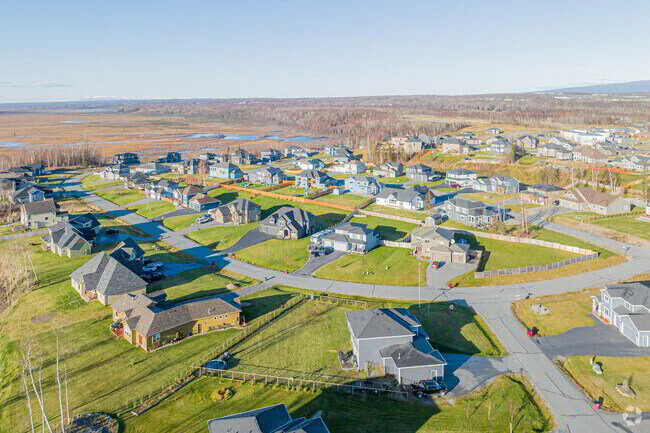
Mat-Su Valley
(Palmer and Wasilla)
The Valley is its own conversation. It's 40 to 60 minutes north of JBER depending on where exactly you're going and the road conditions. Most JBER service members rule it out for that reason, and the commute in deep winter is a real consideration.
But the Valley is where the math gets interesting for multi-family. Prices per unit are meaningfully lower than the bowl, and there's actual fourplex and small multi-family inventory you can find. Marcus from Section 6 bought his fourplex in the Valley for exactly this reason. The commute is real, but the math worked.
Best fit for: veterans with separation timelines who plan to PCS out and keep the property as a rental, investors using a VA fourplex as a wealth-building play more than a primary residence convenience.
How to actually decide
I'd think about it in three questions.
First, how long is your commute tolerance? If you can stomach 25 to 40 minutes, all of these are on the table. If you want under 15, you're looking at Government Hill, Muldoon, or Mountain View.
Second, are you buying single-family or multi-family? If single-family, Eagle River and parts of South Anchorage have the deepest inventory. If multi-family, Government Hill, Mountain View, and the Valley are where the inventory actually exists.
Third, what's your timeline? If you're planning to PCS in 12 to 24 months and turn the property into a rental, prioritize neighborhoods with strong rental demand and easy property management. That tilts toward Eagle River, Mountain View, and the Valley.
A good agent who's done this with military buyers before will save you weeks of looking at the wrong properties. If you don't have one yet, that's part of what I help with on the front end. I work with a handful of agents in Anchorage who get military timelines, VA appraisal quirks, and the multi-family play specifically.
Spoiler alert: Not all agents are cut from the same cloth.
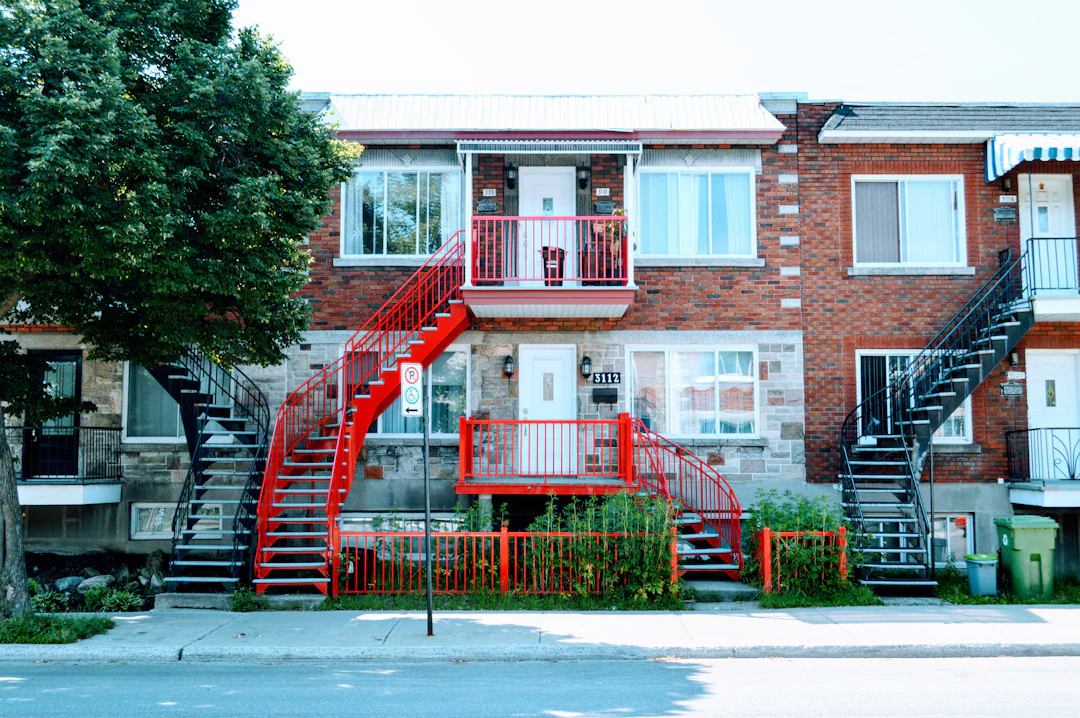
Section 6: The Fourplex Play: Why VA Loans Are the Best Multi-Family Financing Tool in America
Here's a story most people don't believe the first time they hear it.
Last March, I helped Marcus close on a fourplex in the Mat-Su Valley. He's an Army veteran, ten years in, used to be stationed at JBER, separated as an E-6. He's 100% service-connected disabled through the VA, which means he collects a few thousand dollars a month in disability benefits for the rest of his life. Before he came to me, he was paying $1,350 a month to split a house with some other guys, struggling to find his footing after service.
He closed on a $600,000 fourplex. Zero out of pocket. His agent negotiated the closing costs onto the seller. He moved into one unit, rented the other three at $1,650 a month, and the rents covered his entire mortgage.
His housing cost went from $1,350 a month to zero. Overnight.
That's not a trick. That's the VA loan doing exactly what it's supposed to do. And the part nobody talks about is that VA loans aren't just for single-family homes. You can buy up to four units with the same zero-down benefit, as long as you live in one of them for at least 12 months.
"The VA loan is the single best financing tool in America for buying multi-family property. Not one of the best. The best."
I'll say that again because most loan officers don't lead with it. The VA loan is the single best financing tool in America for buying multi-family property. Not one of the best. The best. Here's why.
The four advantages no other loan program can match
Zero down on up to four units.
Conventional investment loans want 5%-20% down on a fourplex. On a $600,000 building, that's $120,000 to $150,000 sitting in cash before you can even make an offer. VA lets you buy the same building with nothing down. That's not a small advantage. That's the difference between buying now and buying never.
No PMI. Ever.
FHA charges mortgage insurance for the life of the loan when you put less than 10% down. Conventional charges PMI until you hit 20% equity. VA charges neither. On a $600,000 loan, skipping PMI saves you somewhere between $300 and $500 a month from day one.
Rental income from the other units helps you qualify.
The lender doesn't just look at your W-2 income. They also count rental income from the units you'll be renting out. On a $600,000 fourplex with three rental units at $1,650 each, that's $4,950 a month in projected rent that helps push your qualifying income up. Your borrowing power goes up the moment you decide to buy multi-family instead of single-family.
You can reuse the benefit.
The VA loan isn't a one-and-done. After you've lived in a property for 12 months and either sold it (restoring full entitlement) or moved out and kept it as a rental (partial entitlement), you can use VA again on the next purchase. Some veterans I work with are on their third or fourth VA loan.
What this actually looks like with real numbers
I'll use my own building because the math is real and I can defend every line of it.
In 2020, my wife and I used my VA loan to buy a fourplex in Anchorage for $700,000. Zero down. We moved into one unit and rented the other three at $1,600 a month each. From day one, those three tenants covered our entire mortgage payment. I didn't write a check for housing. I put money into my pocket every month.
Six years later, those same units rent for $2,300 a month. The mortgage payment is roughly the same as it was when we closed because we locked in a fixed rate. The cash flow keeps growing while the payment stays flat.
That's not a one-off. That's what the VA loan does when you point it at the right asset.


Why this works specifically near JBER
Anchorage has one thing most VA markets don't. A steady, year-round pipeline of military renters cycling through JBER. That means the three units you're renting out don't sit empty. Demand is structural, not seasonal. New PCS orders bring new tenants every quarter. Some of them are looking for landlords who get military life because they've lived it. That's a competitive advantage you can't manufacture.
And Anchorage's price-to-rent ratios on small multi-family are favorable compared to most Lower 48 markets. A $600,000 fourplex pulling $1,650 a unit isn't a deal you find easily in Denver or Phoenix or Austin. It's normal here.
This is what I mean when I tell veterans the VA loan is the most underused wealth-building tool in America. Most people use it to buy a single-family home, live in it for a few years, and sell it. That's fine. But it's a fraction of what the benefit can actually do.
Marcus is on his first rung. I'm on a higher one. The mechanics are identical. Small down payment on income-producing property, tenants cover the mortgage, you build equity while you sleep, and when you've lived there long enough you do it again.
I call this the Leverage Ladder. Every veteran with VA entitlement is sitting on the keys to the first rung and most don't know it.
Want to know if you'd qualify for this play? Take this 3 minute qualifying quiz. No credit pull, no commitment, just a fast read on where you stand.Section 7: What Happens If You PCS
This is the first question almost every JBER service member asks me when I walk them through the fourplex play. "Sounds great, but what happens when I get PCS orders?"
Short answer: nothing happens. You've already met the only requirement that matters, and the property keeps working for you whether you stay in Alaska or not.
The 12-month rule and what happens after
The VA loan requires you to occupy the property as your primary residence for at least 12 months. That's it. After you've hit the 12-month mark, you're free to PCS, rent out your unit, and keep the property as a rental indefinitely. No additional VA approval. No refinance required. You just move out and turn your unit into the fourth rental.
When that happens, the math actually gets better, because now all four units are producing rental income instead of three. The property goes from breaking even on cash flow to producing real positive cash flow every month.
After 12 months, you can PCS, rent out your unit, and keep the property indefinitely. The math gets better when you leave.
Self-managing from across the country
The default pattern I see and the one I recommend first is self-managing remotely. Most veterans who PCS out of Anchorage keep handling the property themselves from the new duty station. With three or four tenants in one building, it's much easier than people expect. You're not running ten doors across five cities. You're running one building.
The key piece that makes remote self-management work is having a handyman on your books, not a general contractor. A handyman who'll show up for a $40-an-hour text request and handle the small stuff. Frozen pipe in unit two. Leaky faucet in unit three. Tenant locked out. You don't want to call a contracting company every time. You want one guy who knows the building and answers his phone.
I made a YouTube video walking through the ten things to do after you buy a rental, and finding your handyman is at the top of the list. This is my first youtube video posted so please excuse the cringe.
When to bring in a property manager
If you decide you don't want to manage at all, a formal property management company runs 8% to 10% of monthly rent. They handle everything: tenant placement, rent collection, maintenance calls, evictions, the works. You sign the agreement once and never think about the building again.
Both paths are valid. My general advice is to self-manage first. You learn the building, you learn what tenants actually need, and you learn what the real cost of operating a rental looks like. After a year of that, if you decide it's not for you, hire a property manager. By then you'll know exactly what you're paying them to do.
Running the play at your next duty station
Here's the part that gets fun. You can run this exact play again at your next base.
Once you've moved out of the Anchorage fourplex and it's producing rental income, that income counts toward your qualifying income for the next purchase. If your next duty station has VA-friendly multi-family inventory, you can use your remaining VA entitlement to buy another small multi-family, live in one unit, and rent the others. Now you've got a fourplex in Anchorage and a fourplex in San Antonio, or wherever you land. Both producing income. Both building equity. Both paid down by tenants.
This is the Leverage Ladder in motion. Each property compounds on the one before it.
Or sell it whenever you want
If you decide you don't want to be a long-distance landlord and you don't want to keep the property, you sell it. Same as any other house. Call your agent, list the building, close, walk away with whatever equity has built up over the years you owned it. The VA loan doesn't lock you into anything beyond the initial 12-month occupancy.
The point is you have options. Keep it as a rental, sell it for the equity, refinance later, or do another VA purchase at the next base. None of those doors close just because you got new orders.
The unexpected ending most veterans don't see coming
The thing nobody warns you about is that most JBER veterans who run this play end up staying in Alaska. They came up here for a tour, bought a fourplex with no money down, ran the math for a year or two, watched their housing cost go to zero, and decided the life was actually pretty good and they get out. They buy a second property. Their kids grow up here.
I'm not saying that's the goal. But it's worth knowing that the play doesn't have to end with you leaving. A lot of times, it ends with you deciding you don't want to.
Section 8: A Few Alaska-Specific Things to Know About VA Appraisals
This section is here so nothing surprises you mid-closing. VA appraisals in Alaska are a little different than in the Lower 48, mostly because of climate and rural property realities. None of these are deal-breakers. They're just worth knowing in advance.
Winter limits what an appraiser can see
If you're closing between November and April, snow cover affects what the appraiser can evaluate. Roof condition, foundation walls, exterior siding, drainage, and yard features can all be partially obscured. Most appraisals still go through cleanly. Occasionally a lender requires a follow-up inspection in spring once the snow melts, which doesn't stop the loan from closing but is something to expect.
Well and septic add steps
Properties outside the Anchorage bowl often run on well water and septic systems. The VA requires a water flow test and a water quality test on the well, and the septic system has to meet local health department standards. This adds time and a small cost to closing. If you're looking in the Valley or rural Eagle River, plan for it.
Heating systems get more scrutiny here than anywhere else
The appraiser confirms the heat source works, is safe, and is appropriate for Alaska winters. Most Anchorage homes run on natural gas and pass without issue. Wood stoves, oil tanks, and outdoor furnaces sometimes get flagged for additional documentation or required repairs.
Older homes can hit Minimum Property Requirements (MPRs)
The VA's MPRs were written for general U.S. housing stock and occasionally catch older Anchorage homes on small items: peeling exterior paint, exposed wiring in unfinished spaces, crawl space access, things like that. None of these are hard stops. They're items the seller fixes before closing.
Anchorage appraisals take a little longer
Plan for two to three weeks for the appraisal to come back, sometimes four during busy season. National lenders who aren't familiar with the Anchorage market sometimes set unrealistic closing timelines that don't account for this. A local lender will build it into your timeline from the start.

Section 9: Step by Step From Inquiry to Keys
If you've read this far and you're thinking about actually doing it, here's what the whole process looks like from your first phone call to the day you get the keys. Most JBER buyers I work with close in 30 days.
Step 1. Pre-approval
The mortgage application itself takes about 10 minutes. The thing that drags out pre-approval for most veterans isn't the lender. It's the document gathering.The faster you get me your documents, the more instant it can feel.
The rule of two is surprisingly common in the mortgage world. Here's what you actually need:
- Last two years of W-2s (or your most recent 30 days of LESs if you're active duty, sometimes just your most recent LES is enough)
- Last two pay stubs if you're not active duty
- Last two months of bank statements
- Your ID
That's it for getting started. I pull your Certificate of Eligibility from the VA portal myself, usually same day. For active duty, we often don't need your DD-214. The COE pull confirms what we need to confirm.
Once your documents are in, pre-approval is fast. Modern underwriting tools let me get most veterans an answer within an hour or two of receiving a clean package. Pre-approvals these days are essentially done overnight.
This step costs you nothing and doesn't commit you to anything.
Step 2. Find your agent
If you don't already have a real estate agent, this is where you get one.
Here's something I tell every veteran I work with. Not all agents are the same. You will not be able to tell the full-timers from the part-timers just by looking, and the difference can change your entire deal.
A good agent for a JBER buyer needs to know:
- How rental income calculations work when you're buying multi-family
- How to be the conductor of the orchestra (metaphorically speaking)
- How to read the multi-family market in Anchorage specifically
- How to navigate under-rented units and opinions of value when you're writing offers on small multi-family
- VA appraisal quirks so they structure offers that don't fall apart mid-closing
A part-time agent who sells two or three houses a year won't have run into any of this. A full-time agent who's done VA fourplex deals will save you weeks of looking at the wrong properties and hours of headaches at closing.
I work with a handful of agents in Anchorage who get all of this. If you want an introduction, I'll make it.
Step 3. Shop and make an offer
This part is variable. Most buyers spend a week or two shopping before they find the property they want to write on. Some find it the first weekend. Some take a month. There's no right pace.
When you find one, you write an offer. For VA buyers, structure matters. A strong offer often includes seller-paid closing costs (which VA allows up to 4% of the loan amount in seller concessions) and a reasonable inspection contingency. Your agent walks you through the negotiation.
Once the offer is accepted, you're under contract and the clock starts on the 30-day close.
Step 4. Inspection and appraisal
You schedule a home inspection within the first week of being under contract. The inspector walks the property and gives you a detailed report on everything from the roof to the electrical panel. This is separate from the VA appraisal and exists to protect you.
Meanwhile, I order the VA appraisal. As Section 8 covers, Anchorage appraisals run two to three weeks. The appraiser confirms the value of the property and that it meets VA Minimum Property Requirements.
If anything comes up on either the inspection or the appraisal, your agent negotiates with the seller. Repairs get made, credits get issued, or the price gets adjusted.
Step 5. Underwriting
While the appraisal is happening, the loan moves through underwriting in parallel. Underwriting is the lender's deep dive on your file. Sometimes they ask for one or two additional documents. You upload them. The underwriter signs off. You get a "clear to close."
This is the green light.
Step 6. Closing day
You sign documents. Depending on the title company, this takes 30 to 60 minutes. You get the keys. If you're buying a fourplex, you walk in as the new owner of a building that's going to pay you back every month for as long as you own it.
What the whole process costs you in time
Most buyers I work with spend about 5 to 10 hours of their own time total spread across the 30 days. The mortgage application, document uploads, a few phone calls, the inspection, the closing. That's it.
Compared to most major financial decisions, it's surprisingly light.
If you're sitting at JBER right now thinking "I should probably look into this," the first step is the cheapest, fastest, and least committing one. Pre-approval costs you nothing and gives you a definitive answer on what you actually qualify for.
Section 10: Frequently Asked Questions
What credit score do I need to qualify for a VA loan?
The VA itself doesn't set a minimum credit score. Individual lenders do, and most fall somewhere between 580 and 620. The honest answer is that the further you fall below 850, the harder the process gets. Higher scores get you better rates and smoother underwriting. Lower scores are workable but require more documentation and sometimes compensating factors like higher reserves or stronger income.
If your score isn't where you want it to be, don't assume you're disqualified. Get pre-approved first and find out where you actually stand. A lot of veterans I work with come in expecting to be told no and end up qualifying comfortably.
Can I use a VA loan more than once?
Yes. The VA loan is a lifetime benefit, not a one-and-done. You can use it, sell the property and have your entitlement restored, then use it again. You can also use it on a new property while keeping the old one as a rental, as long as you have enough remaining entitlement to cover both.
I often have clients who end up with three VA loans when the numbers pan out and we strategize the timing right. Every veteran with full entitlement is sitting on a tool they can use again and again.
Do I have to live in the property I buy with a VA loan?
Yes. The VA loan is for primary residences only. You have to move into the property within 60 days of closing and live there as your primary residence for at least 12 months. After that, you're free to move out, keep it as a rental, or sell it.
This rule is what makes the fourplex strategy in Section 6 work. You live in one unit for 12 months, rent out the other three, then PCS or move on and rent out your unit too.
Can I use a VA loan to buy a fourplex or other multi-family property?
Yes, and it's one of the most underused features of the entire VA benefit. You can buy up to four units with zero down as long as you live in one of them for the first 12 months. The rental income from the other units helps you qualify, the loan has no PMI, and the math often works out better than buying a single-family home.
This one financial decision can completely change the trajectory of a veteran's life. Section 6 walks through exactly how it works with real numbers.
Can my spouse's income help me qualify?
Yes. Your spouse's income can be counted toward qualifying income on the VA loan, even if your spouse isn't a veteran. Your spouse's credit history also gets considered, so if their credit is stronger than yours it helps, and if it's weaker than yours it can drag the file down. A good loan officer will tell you upfront which approach makes the most sense for your specific situation.
If both spouses are veterans, you can also combine entitlements, which opens up additional possibilities.
What is the VA funding fee and do I have to pay it?
The VA funding fee is 2.3% of the loan amount for most first-time VA borrowers with zero down. It's generally rolled into your loan, so you don't pay it out of pocket at closing. The fee goes back to the VA to keep the program running.
If you have a service-connected disability rating, the funding fee is waived entirely. That's a $10,000 to $15,000 savings on a typical Anchorage purchase. Purple Heart recipients on active duty are also exempt. Surviving spouses receiving Dependency and Indemnity Compensation are exempt too.
Can I use my BAH and COLA to qualify for a VA loan?
Yes, and both get grossed up by 25% because they're tax-free entitlements. Same for BAS. Section 4 walks through exactly how this works and what it means for your buying power, but the short version is that your real qualifying income on a mortgage application is meaningfully higher than what your paycheck shows.
What happens to my VA loan if I PCS out of Alaska?
Nothing happens to the loan itself. Your mortgage stays the same. Your rate stays the same. Your payment stays the same. The only thing that changes is that after your 12-month occupancy is up, you can move out, rent your unit, and keep the property as a rental indefinitely.
You can also use your remaining VA entitlement to buy another property at your next duty station. Section 7 walks through the full PCS scenario in detail.
Can I buy new construction or build a fourplex with a VA loan?
Yes. New construction works, and you can build a new fourplex with VA financing too. It's the same rules as buying an existing property. The build process is a little more complex on the lender side, but for you as the buyer the experience is essentially the same.
What's the difference between a VA appraisal and a home inspection?
The VA appraisal is ordered by the lender and confirms the value of the property plus that it meets VA Minimum Property Requirements. It's required.
The home inspection is ordered by you and gives you a detailed report on the condition of the property. It's not required by the VA but it should be. VA appraisers look for what's in the guidelines. Sometimes they're stricter than appraisers on conventional loans, especially around safety items and condition issues. But a VA appraiser is not a substitute for an inspector. Get both.
Section 11: Where To Go From Here
If you've read this far, you already know the play. The VA loan is the most underused wealth-building tool in America, Anchorage is one of the best markets in the country to use it, and the fourplex strategy in Section 6 can change the trajectory of your life with one financial decision.
The hardest part of all of this isn't the math, the paperwork, or the timeline. It's the deciding. Most veterans who eventually do this look back and wish they'd started a year earlier.
Here's what I'd do if I were you.
Take the 3 minute qualifying quiz
If you want a fast read on where you stand before talking to anyone, the quiz gives you a baseline in about 20 seconds. No credit pull. No commitment. It asks four questions, grades your answers, and tells you whether you're in good shape, close, or have some work to do first.
This is the lowest-friction first step. Most veterans I work with start here.
Or just call
If you'd rather skip the quiz and have me run your actual numbers, that takes one phone call. I'll pull your Certificate of Eligibility, review what you've got coming in, factor in the gross-up on your tax-free entitlements, and tell you exactly what you qualify for. Pre-approval letter in your hand within a day or two of a clean document package.
You can reach my team at 907-917-5259 or slavik@firstrateak.com.
Either way, start
The single biggest mistake I see veterans make is sitting on this benefit for years thinking they're not ready. You're more ready than you think. The qualification math is friendlier than you expect once we gross up your pay and factor in projected rental income. The 30-day timeline is faster than people realize. And the strategy compounds, so every year you wait is a year of equity, cash flow, and appreciation you don't get back.
If you're stationed at JBER right now, this benefit is sitting in your service record waiting for you to use it. Use it.

About Slavik Lund
Slavik Lund is the #1 mortgage loan originator in Alaska for 2025, a veteran, and a real estate investor who owns 10 rental units across Anchorage. He bought his first fourplex at 21 and has used the VA benefit multiple times to build his own portfolio. He helps veterans run this exact play every single day.
NMLS #2054568 | First Rate Financial, NMLS #184451, Equal Housing Lender
Important Disclaimer
Slavik Lund is a Mortgage Loan Originator (NMLS: 2054568) licensed under First Rate Financial (NMLS: 184451), an Equal Housing Lender. This article is for educational purposes only. All calculations should be verified independently. This article is not an offer to lend and should not be used directly to make decisions on home offers, purchasing decisions, or loan selections. Not guaranteed to provide accurate results, imply lending terms, qualification amounts, or real estate advice. Loan limits, BAH rates, funding fees, and program rules are subject to change.